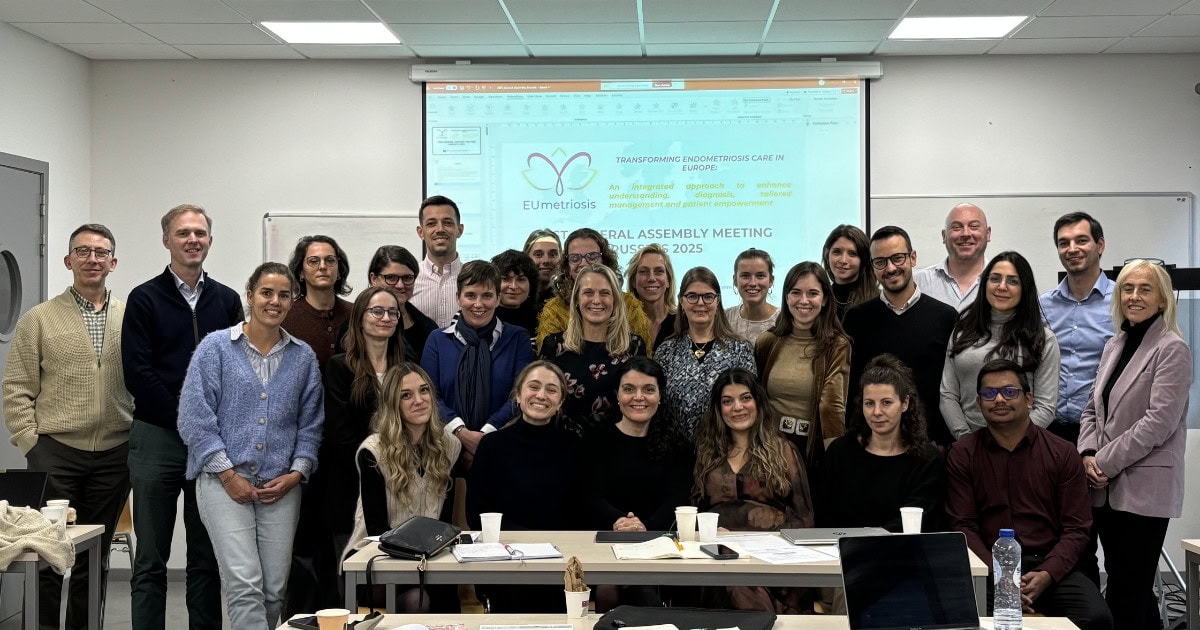
For many with endometriosis, the pathway to diagnosis and care is often a long process, having a significant impact on one’s quality of life, and their mental and physical health. Delays in diagnosis, limited treatment options and a lack of understanding of the condition have contributed to endometriosis being under-recognised and underfunded in both research and clinical practice.
With EUmetriosis, we hope to change that by conducting research that is collaborative, multidisciplinary, and focused not only on disease mechanisms but also on lived experience, lifestyle, quality of life and more personalised data models.
We asked the research teams involved in EUmetriosis what key message they would want people living with endometriosis to take away from their research.
“Breakthroughs will not happen overnight, but endometriosis is no longer being overlooked. Coordinated European research reflects real commitment and sustained momentum towards better diagnosis, management and improved care for patients.”
Radboud University Medical Center
“With the data we are gathering, we hope to create more knowledge on the effect of nutrition on endometriosis related pain and quality of life.”
Fondazione IRCCS Ca’ Granda Ospedale Maggiore Policlinico
“In our research, we aim to contribute to a model of care in which those with endometriosis are not treated solely as IVF patients but are supported as whole individuals. Addressing modifiable lifestyle factors, improving symptom burden, and integrating multidisciplinary expertise may help create a more supportive and personalised pathway to fertility treatment.”
“Our goal is to generate evidence that supports a more holistic, patient-centred approach, one that combines scientific rigor with advocacy and empowerment.”
“Our work aims to identify new microRNA biomarkers and therapeutic targets for endometriosis. Our work helps with early diagnosis and understanding disease mechanisms by studying cell-cell interactions through microRNA profiles in exosomes derived from menstrual effluent.”
“Exosome-based microRNA diagnostics are still a developing field but it is a promising direction. Endometriosis may soon be detectable and treatable in much more precise, less invasive ways.”
This is a positive step forward for endometriosis research and demonstrates a shift beyond symptom management towards earlier diagnosis, more personalised care, multidisciplinary collaboration, and a greater understanding of the lived experience of endometriosis. While the research is still in its early stages, meaningful progress is being made towards improving diagnosis, care, treatment and quality of life for those affected by endometriosis.